Hacking Google Random Number Generator (Part 2)

Confused? See Part 1.
Remember that time when I cracked the Google random number generator? Rumour has it that it stopped working: I’ve been told that the code is slow, the numbers are wrong, it ruined someone’s well-rehearsed party trick in front of their crush, bankrupted a small business selling “intricate magic boxes”, caused a train delay and consequently a minor, albeit heated, diplomatic incident, among other things.
Recap
The original method recovered the 128-bit xorshift state from consecutive Math.random() outputs by feeding a constraint system into Z3. Two things have since changed: how the internal state is converted to a double and the xorshift algorithm itself.
Change 1: ToDouble
Commit e0609ce6:
Make random ToDouble better distributed
Use division instead of bit magic plus subtraction to map the RNG integer state into the [0,1) double value range.
The old ToDouble produced floats in [0, 1) using “bit magic”:
static inline double ToDouble(uint64_t state0) {
    static const uint64_t kExponentBits = uint64_t{0x3FF0000000000000};
    uint64_t random = (state0 >> 12) | kExponentBits;
    return base::bit_cast<double>(random) - 1;
}
The new version replaces this with integer division. By the way, it’s a great case to see the difference between bit_cast and static_cast:
static inline double ToDouble(uint64_t random) {
    // Get a random [0,2**53) integer value (up to MAX_SAFE_INTEGER) by dropping
    // 11 bits of the state.
    double random_0_to_2_53 = static_cast<double>(random >> 11);
    // Map this to [0,1) by division with 2**53.
    constexpr double k2_53{static_cast<uint64_t>(1) << 53};
    return random_0_to_2_53 / k2_53;
}
In the Python code it’s mirrored as:
def to_double(random):
    return (random >> 11) / (1 << 53)
Right-shifting by 11 bits, instead of 12, gives us one extra bit of entropy, making it 53 bits total and a statistically better, more uniform distribution.
This changes how the bounds are set. Recall that the observed value x is produced by:
x = Math.floor(Math.random() * (max - min + 1)) + min
So the 53-bit integer r satisfies:
floor(r / 2^53 * (max - min + 1)) == x - min
r maps to x when it falls in the half-open interval [lo, hi), where lo = normalize(x) * 2^53 and hi = normalize(x+1) * 2^53. Since r is an integer, the inclusive bounds are [ceil(lo), ceil(hi) - 1]. Using floor(lo) would include a value that maps to x - 1, so ceil(lo) is used. Similarly, ceil(hi) - 1 is used because ceil(hi) would map to x + 1. In the code:
def normalize(val):
    return (val - min) / (max - min + 1)

def get_bounds(point):
    lo = normalize(point) * (1 << 53)
    hi = normalize(point + 1) * (1 << 53)
    return math.ceil(lo), math.ceil(hi) - 1
The nasty exponent edge-case check from the original, where upper_exp == 1024, disappears entirely.
Change 2: xorshift128+ with a plus
Commit 0596ead5:
Resurrect add operation in xorshift128+ implementation
… which was accidentally removed in https://crrev.com/c/1238551.
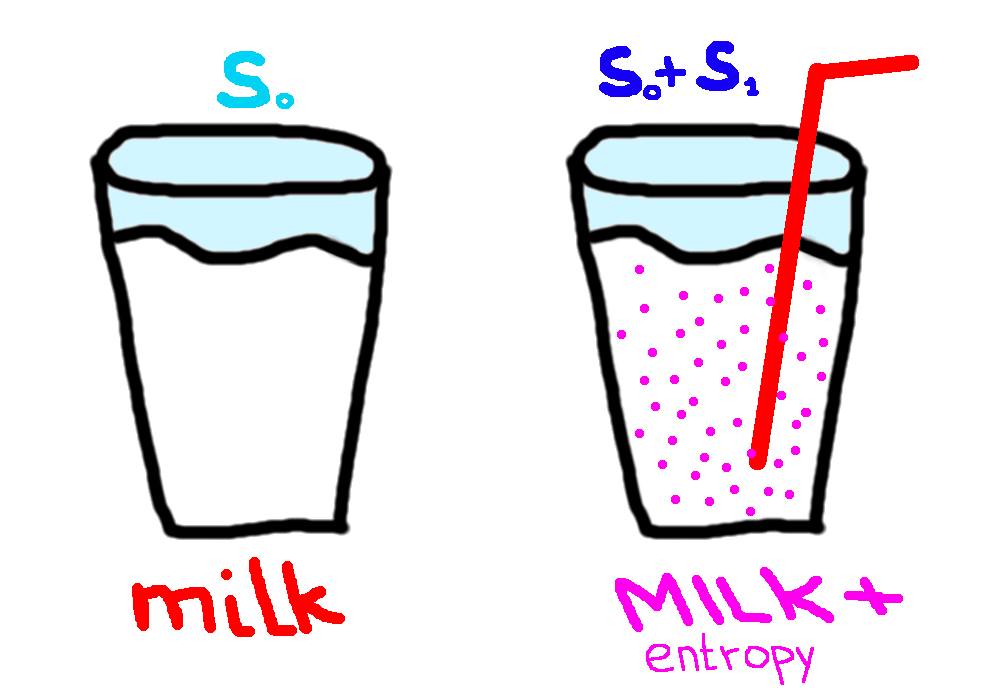
For 7 years, the Korova milk bar served plain milk instead of milk plus
This one is remarkable. Since 2018 xorshift128+ wasn’t actually what it claims. It was plain xorshift128 without the plus. The 64-bit states weren’t summed and only state0 was used to fill the cache:
// Old: void, return value discarded
static inline void XorShift128(uint64_t* state0, uint64_t* state1) {
    uint64_t s1 = *state0;
    uint64_t s0 = *state1;
    *state0 = s0;
    s1 ^= s1 << 23;
    s1 ^= s1 >> 17;
    s1 ^= s0;
    s1 ^= s0 >> 26;
    *state1 = s1;
}

XorShift128(&state.s0, &state.s1);
cache->set(i, ToDouble(state.s0));
After 7 years in production, this was fixed by returning the sum s0 + s1:
// New: returns s0 + s1
static inline uint64_t XorShift128(uint64_t* state0, uint64_t* state1) {
    uint64_t s1 = *state0;
    uint64_t s0 = *state1;
    *state0 = s0;
    s1 ^= s1 << 23;
    s1 ^= s1 >> 17;
    s1 ^= s0;
    s1 ^= s0 >> 26;
    *state1 = s1;
    return s0 + s1;  // <-- this line was missing for 7 years
}

uint64_t random = XorShift128(&state.s0, &state.s1);
cache->set(i, ToDouble(random));
Now the output is state0 + state1 so the constraints become:
points = points[::-1]
for point in points:
    state0, state1 = xs128p(state0, state1)
    output = state0 + state1
    calc = z3.LShR(output, 11)

    lower, upper = get_bounds(point)
    solver.add(z3.And(lower <= calc, calc <= upper))
Both state variables are entangled in every constraint, which increases computation time.
In the prediction itself we also use the sum of the states:
if solver.check() == z3.sat:
    model = solver.model()
    state = {}
    for d in model.decls():
        state[d.name()] = model[d]
    s0_val = state["state0"].as_long()
    s1_val = state["state1"].as_long()

    output = (s0_val + s1_val) & 0xFFFFFFFFFFFFFFFF
    next = math.floor(to_double(output) * (max - min + 1)) + min
    print(next)
Here, overflow will happen during summation, so a 64-bit mask (0xFFFFFFFFFFFFFFFF) is applied to the output.
The observer’s paradox
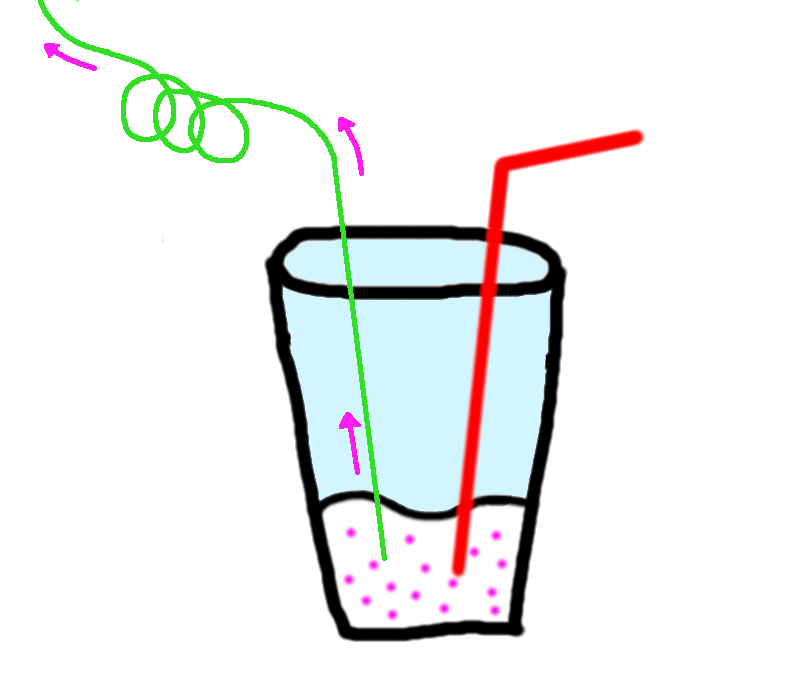
Someone's sipping my entropy
For ease of collecting data, I logged generated points into the console and copied into my code. It worked. However, later, when I tested it again, but copied the numbers manually, the solver failed. I tried again with the data from the console: it worked. Although the numbers were the same, when I copied them manually from the widget, it failed. Weird.
Quantum computing? No, telemetry. The paradox was caused by a call to Math.random() triggered by an event listener on selection, attached to the whole document. It’s connected to Google’s telemetry and Math.random() is used to collect just 5% of the data.
Moreover, I’ve discovered that when using Chrome without a Google profile logged in, every click of the “Generate” button runs 2 extra calls of Math.random(). Similarly, some other clicks also trigger 2 calls. This is connected to telemetry too, which requires a 64-bit ID, generated by two halves consuming one call each.
Although it’s possible to handle this case in the solver by adding extra runs of xorshift for every point without any constraints, I’ve decided not to do it, due to the unclear nature of these twisted calls and my general disdain for them. They are more unpredictable than the RNG itself.
As a result, in my case, the solver works as-is in Google Chrome v147 with a Google profile without selecting anything on the page in between calls. Or more generally: for any sequence of consecutive Math.random() calls.
Perhaps the electron, too, behaves differently under observation because of all-encompassing telemetry calls.